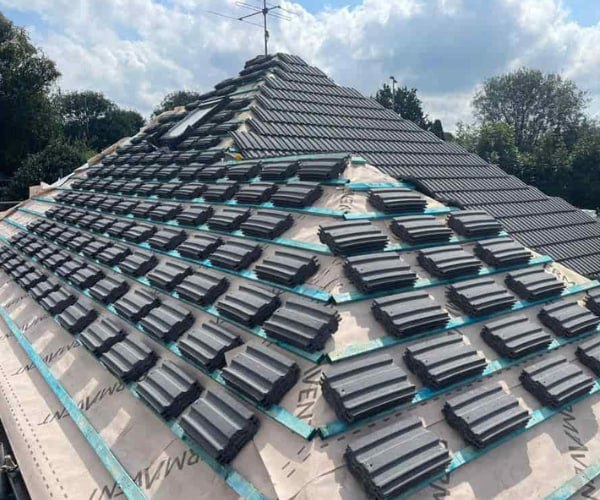
Why Choosing an Experienced Roofer Matters When Dealing With Persistent Leaks
A persistent roof leak is more than an inconvenience. If water continues to enter after previous repairs, it often means that the original source has not been identified, the repair did not address the full defect or several roofing components are contributing to the problem.
Experienced roofers approach recurring leaks methodically. Instead of treating only the visible damp patch, they examine how water could be entering, where it may be travelling and which materials have been affected. This detailed diagnosis is essential for achieving a lasting repair.
How Experience Helps Resolve Persistent Roof Leaks
Roof leaks can be deceptive because the place where water appears indoors may be some distance from the external defect. Knowledge of different roof types, materials and drainage routes helps a roofer interpret the evidence accurately.
Water Rarely Travels in a Straight Line
Once rainwater passes beneath tiles, slates or flashing, it may travel along underlay, rafters, battens or other surfaces. It can then drip into the property through a joint or fixing point far from the original opening.
An internal ceiling stain should therefore be treated as a clue rather than confirmation of the leak’s source. An experienced roofer will trace the likely route of the water instead of assuming that the defect is directly above the visible mark.
Persistent Leaks Often Involve Roof Junctions
Leaks frequently develop where different roofing components meet. These junctions need to accommodate changes in angle, materials and water flow, making them particularly important during an inspection.
Areas that may require close attention include:
- Chimney flashing
- Roof valleys
- Abutments against walls
- Ridges and hips
- Roof windows and vents
- Pipe penetrations
- Flat and pitched roof connections
- Gutter and eaves details
A small gap within one of these areas may only admit water during particular weather conditions. Recognising these patterns requires an understanding of how the roof functions as a complete system.
Previous Repairs Can Hide the Original Problem
Repeated patching can make a leak harder to diagnose. Sealants, replacement tiles and localised coverings may alter the route of the water without stopping it from entering.
An experienced roofer assesses earlier work as part of the investigation. This can reveal whether a repair has failed, whether it addressed the wrong area or whether nearby materials have deteriorated since the work was completed.
Simply adding another patch may temporarily reduce the symptoms while leaving the underlying weakness unresolved.
Different Weather Can Produce Different Leaks
Some defects only allow water into the roof during heavy rain. Others become apparent when wind drives rain beneath a raised edge or towards a particular junction.
Useful information includes:
- Whether the leak appears during light or heavy rainfall
- Whether wind is present
- How quickly the damp patch develops
- Whether the problem occurs every time it rains
- Which part of the ceiling or loft becomes wet
- Whether the affected area dries completely afterwards
An experienced roofer can combine these observations with the roof’s design to narrow down the likely entry points.
A Thorough Inspection Looks Beyond the Surface
Checking only the visible roof covering may not provide a complete answer. Persistent leaks can involve underlay, battens, fixings, mortar, flashing or concealed junctions.
Where accessible, an effective assessment may include both the exterior and the roof space. Moisture trails, staining, damp insulation and changes in timber colour can help show how far the water has travelled.
The surrounding area should also be inspected. One damaged tile may be easy to replace, but the repair will not last if a weakened batten or failed fixing remains underneath it.
Correct Diagnosis Prevents Unnecessary Work
A recurring leak does not automatically mean that the entire roof has failed. In many cases, a specific defect can be repaired once it has been accurately located.
Equally, repeated problems across several areas may indicate that isolated patching is no longer suitable. An experienced roofer can distinguish between localised damage and broader deterioration, helping ensure that the proposed work matches the roof’s actual condition.
Skilled Repairs Address the Cause
A lasting repair should restore the roof’s ability to direct water away from the property. This may involve replacing damaged materials, reinstating correct overlaps, renewing flashing, repairing a valley or correcting a poorly formed junction.
The workmanship must also integrate with the surrounding roof. New materials should be securely fitted without unnecessarily disturbing sections that remain serviceable.
Addressing the cause rather than covering the symptom reduces the chance of the leak returning during the next period of wet weather.
Experience Helps Identify Related Damage
When a leak has been present for some time, moisture may affect more than the original entry point. Underlay can deteriorate, battens may weaken and insulation can become damp.
A professional assessment should establish:
- Where water is entering
- How far it has travelled
- Which materials have been affected
- Whether nearby components remain secure
- What is needed to reinstate weather resistance
This broader view prevents important secondary damage from being overlooked.
Why Prompt Assessment Is Important
Each period of rainfall can allow more moisture into an unresolved defect. Water may spread into previously dry areas, making the route harder to trace and increasing the amount of affected material.
For properties in Shortstown, Bedfordshire, arranging an assessment when a leak returns can help contain the problem. Keeping a note of when the leak occurs and where moisture appears can also provide useful information during the inspection.
Conclusion
Choosing an experienced roofer matters when dealing with persistent leaks because accurate diagnosis is the foundation of an effective repair. Water can travel away from its entry point, previous patches may conceal the fault and several roofing components may be involved.
A methodical inspection allows the true cause, water route and extent of the damage to be established before repair work begins. LKN Roofing Shortstown provides professional roof leak detection and repairs in Shortstown, Bedfordshire. If a leak keeps returning, contact the team to arrange a thorough assessment.
Call us on: 01234 860 695
Click here to find out more about LKN Roofing Shortstown
Click here to complete our contact form and see how we can help with your roofing needs.