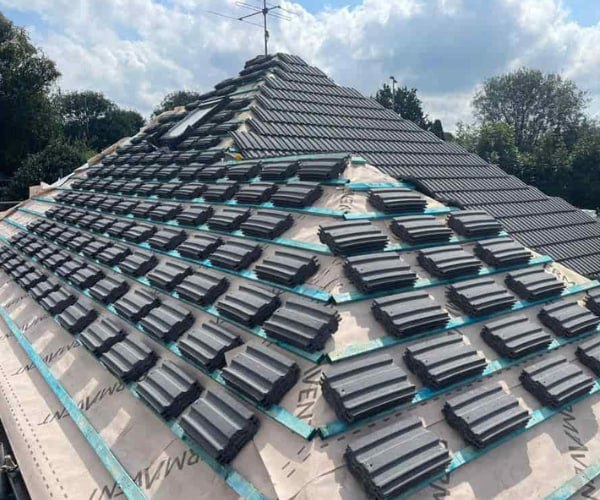
What Causes Roof Tiles to Slip Out of Position?
A slipped roof tile may look like a small and isolated defect, but tiles rarely move without a reason. A tile that has dropped below the surrounding roof covering, shifted sideways or disappeared completely may indicate deterioration in its fixings, damage to the tile itself or a problem affecting the supporting roof structure.
Because tiled roofs rely on overlapping courses to direct rainwater safely towards the guttering, even a relatively small displacement can create an unwanted opening within the roof covering. For homeowners in Shortstown, Bedfordshire, identifying why a tile has slipped is therefore just as important as putting it back into position.
Professional roof assessment can determine whether the problem is genuinely confined to one tile or whether similar weaknesses are developing elsewhere.
Why Do Roof Tiles Become Loose and Slip?
Roof tiles can slip when the components holding them in their intended position stop providing adequate support. Depending on the type and age of the roof, tiles may rely on nails, clips, nibs, battens and the arrangement of surrounding tiles to remain secure.
Weather exposure, deterioration, movement and previous workmanship can all affect these components.
The visible slipped tile is therefore often the final symptom of a process that has been developing for some time. Understanding that process helps ensure the repair addresses the cause rather than simply correcting the appearance of the roof.
Fixings Can Deteriorate Over Time
Roof tile fixings remain exposed to demanding conditions for many years.
As a roof ages, metal fixings can deteriorate, loosen or lose some of their effectiveness. Once a fixing no longer holds a tile securely, gravity and weather exposure can gradually allow the tile to move.
The problem may initially be difficult to see from ground level.
A tile might move only slightly before eventually slipping far enough to become visibly misaligned with the surrounding courses.
Where one fixing has deteriorated because of age, it can also be sensible to assess nearby tiles rather than assuming the problem is completely isolated.
Broken Tile Nibs Can Cause Movement
Some roof tiles are designed with nibs that help them sit securely over the battens beneath.
If these nibs become damaged or break away, the tile may lose an important part of its support. It can then begin moving down the roof slope.
A broken nib is not always obvious while the tile remains largely in position.
This is why simply pushing a slipped tile upwards may not provide a reliable repair. If the component responsible for holding it has failed, the tile can move again.
Cracked Tiles Can Become Unstable
Roof tiles can sometimes develop cracks without immediately falling from the roof.
As the damage progresses, part of the tile may lose its structural integrity. A fractured section can move independently, while the remaining tile may no longer sit correctly within the surrounding roof covering.
Cracking can develop through weather exposure, impact or gradual deterioration.
Once the tile is compromised, replacing or properly repairing the affected component is generally more appropriate than attempting to reposition damaged material as though it were still intact.
Strong Winds Can Displace Vulnerable Tiles
Wind places considerable pressure on a roof because it moves across and around the building rather than simply striking it from one direction.
Tiles that are already slightly loose can be particularly vulnerable. Wind can lift or disturb them sufficiently for their original position to change.
The visible damage may therefore appear after a period of poor weather even though the underlying weakness existed beforehand.
This distinction matters. Weather may be the event that exposes the problem rather than the sole reason the tile became insecure.
Repeated Weather Exposure Can Gradually Weaken a Roof
Not every slipped tile is caused by one dramatic event.
Roofs are continually exposed to wind, rainfall and changing temperatures. Over many years, this repeated exposure can affect tiles, fixings and other components within the roof covering.
Small weaknesses can develop gradually until a tile eventually moves.
This is one reason apparently sudden roof problems can sometimes be related to longer-term deterioration rather than something that occurred on the day the defect became visible.
Roof Battens Play an Important Supporting Role
Tiles do not function independently from the structure beneath them.
Roof battens provide important support and fixing points across a tiled roof. If a batten has deteriorated or become damaged, the tiles associated with that section may no longer be supported as intended.
In this situation, replacing a slipped tile alone would not address the underlying weakness.
The condition of the supporting area should be examined so that the repair can restore the complete arrangement rather than concentrating only on the most obvious symptom.
Movement Within the Roof Can Affect Tile Alignment
Roof coverings are constructed as interconnected systems.
If movement develops within part of the supporting structure or roof covering, tile alignment can sometimes be affected. What initially appears to be a single slipped tile may therefore require closer inspection.
Patterns are particularly important.
Several tiles moving in the same section of roof can indicate a different problem from one individually damaged tile. Identifying these patterns helps determine how extensive the assessment needs to be.
Poor Previous Workmanship Can Lead to Slipping Tiles
Tiles that have not been installed or secured correctly may remain in position for a period before problems become apparent.
If inappropriate fixings were used, tiles were not seated correctly or previous repairs did not restore the original support properly, later movement can occur.
A recurring slipped tile is particularly worth investigating.
If the same area has already been repaired and the problem returns, repeatedly repositioning the visible tile is unlikely to provide a dependable solution unless the reason for the movement is identified.
Previous Repairs Can Sometimes Hide the Real Cause
A tile may have been repositioned during an earlier repair without the underlying fixing or support being corrected.
Initially, the roof may appear normal again. Over time, however, the same weakness can allow the tile to move once more.
This is why the history of the affected area can be useful during assessment.
Evidence of repeated work in one location may suggest that a more detailed examination is required rather than another surface-level correction.
Moss and Debris Can Affect Tiled Roofs
Organic growth and accumulated debris can sometimes influence the condition of a tiled roof.
Moss can establish itself around tile edges and joints, while debris may collect within particular sections. As this material develops, it can interfere with the way water moves across the roof and make visual inspection more difficult.
The presence of moss does not automatically mean tiles will slip.
However, where a roof already contains ageing or vulnerable components, heavy growth can make existing defects harder to identify and may contribute to conditions that deserve professional attention.
Why One Slipped Tile Should Not Be Ignored
It is easy to regard one displaced tile as insignificant when the remainder of the roof appears intact.
However, the tiled covering depends on consistent overlap.
When a tile slips, the area beneath it can become less protected from wind-driven rain. The exact effect depends on how far the tile has moved and the condition of the materials underneath.
Early inspection can establish whether the defect remains localised and allow appropriate work to be carried out before prolonged exposure creates additional problems.
A Slipped Tile Can Allow Water Beneath the Roof Covering
Tiles form the primary weather-facing layer of a tiled roof.
When they are correctly positioned, rainfall is directed down the slope across overlapping courses. A displaced tile interrupts this arrangement and can expose an area that was intended to remain covered.
Water entering beneath the tiles does not necessarily appear immediately as a visible internal leak.
It can travel along roofing materials or follow structural components before becoming noticeable elsewhere. For this reason, the internal location of damp does not always identify the exact point where the roof covering has failed.
Several Slipped Tiles May Indicate a Wider Issue
One damaged tile can result from a highly localised defect.
Several slipped tiles, particularly when concentrated within the same section, deserve a broader assessment.
Possible factors can include deterioration of fixings, problems with battens, ageing materials or weaknesses within previous work.
The objective should not be to assume that extensive repair is necessary, but equally it is important not to treat several related symptoms as unrelated defects without investigation.
Can a Slipped Roof Tile Simply Be Put Back?
Sometimes a tile can be restored to its correct position as part of a straightforward local repair, but this depends entirely on why it moved.
If the tile remains sound and its supporting components are in suitable condition, the required work may be limited.
If a nib is broken, the fixing has failed or the supporting batten is compromised, simply sliding the tile back into position does not resolve the problem.
A reliable repair needs to restore the means by which the tile remains secure.
Why the Surrounding Tiles Should Be Checked
When one tile slips, neighbouring tiles can provide useful information about the condition of the roof.
They may remain completely secure, supporting the conclusion that the defect is isolated. Alternatively, inspection may reveal movement, damaged fixings or other signs of deterioration nearby.
Checking the surrounding area helps establish the appropriate scope of repair.
This approach avoids unnecessary work when the defect is genuinely local while reducing the likelihood of overlooking connected weaknesses.
Signs That a Tiled Roof May Need Attention
Slipped tiles are not always easy to identify, particularly on roof slopes that are difficult to view from ground level.
Potential warning signs can include:
- A tile sitting lower than neighbouring tiles
- Uneven or irregular tile courses
- A visible gap within the roof covering
- Broken tile fragments around the property
- A tile that appears twisted or displaced
- Several tiles moving within the same area
- Recurring movement after an earlier repair
- Damp appearing internally following rainfall
These signs do not all confirm the same problem, but they provide a sensible reason to have the roof assessed.
Early Repairs Can Help Keep the Work Localised
One advantage of identifying a slipped tile early is that the underlying problem may still be limited to a relatively small area.
Leaving an opening exposed to repeated weather can potentially allow deterioration to affect materials that were previously protected.
Prompt assessment helps determine what has failed and whether nearby components remain sound.
Where the defect is genuinely isolated, a targeted repair can restore the affected section without unnecessary intervention elsewhere on the roof.
Why Professional Roof Inspection Matters
The most visible defect is not always the complete problem.
From ground level, a homeowner may be able to see that a tile has slipped but cannot necessarily determine whether its fixing, nib, batten or another supporting component has failed.
Professional inspection allows the affected section and surrounding roof covering to be assessed more closely.
The aim is to understand why the movement occurred, establish whether it is isolated and carry out a repair that addresses the actual cause.
Roof Tile Repairs in Shortstown, Bedfordshire
At LKN Roofing Shortstown, we assess slipped and displaced roof tiles with attention to the reason behind the movement rather than focusing solely on the visible position of the tile.
Where appropriate, the affected tile, its fixings, supporting components and surrounding roof covering can be checked to establish the extent of the problem. This helps determine whether a straightforward localised repair is suitable or whether connected deterioration also requires attention.
For homeowners in Shortstown, Bedfordshire, dealing with a slipped tile promptly can help maintain the integrity of the tiled roof covering and prevent a small defect from remaining exposed unnecessarily.
Conclusion
Roof tiles can slip out of position for several reasons, including deteriorated fixings, broken nibs, cracked tiles, weather exposure, damaged battens and weaknesses associated with previous workmanship. In some cases, the defect is confined to a single tile; in others, it can be an early indication of deterioration affecting a wider section.
The important point is to identify why the tile moved before deciding on the repair. Simply pushing it back into place may only provide a temporary improvement if the component responsible for securing it has failed.
If you have noticed a slipped, loose or displaced roof tile at your property in Shortstown, Bedfordshire, contact LKN Roofing Shortstown to arrange a professional assessment. We can identify the cause of the movement and determine the appropriate repair needed to restore the affected area of your roof.
Call us on: 01234 860 695
Click here to find out more about LKN Roofing Shortstown
Click here to complete our contact form and see how we can help with your roofing needs.